The Planner Was Supposed to Save You and Now It's Just Judging You From the Nightstand
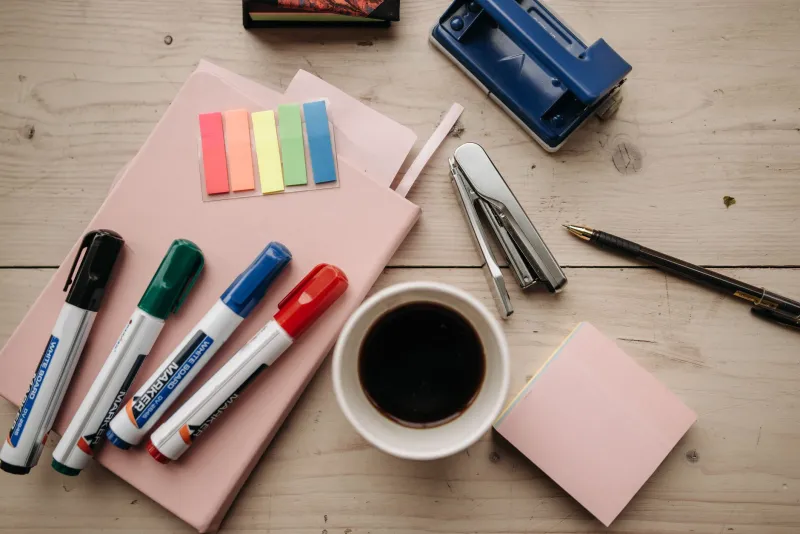
Let's establish the scene. It was late August, or maybe January, or possibly a random Tuesday when you hit a wall and decided that the problem — the root problem, the reason your life felt like a browser with 47 tabs open and no memory left — was that you simply lacked structure.
Not ambition. Not time. Not a functioning sleep schedule. Structure. Specifically, the kind that comes in a 7x9 hardcover with a linen cover, gold foil lettering, a monthly spread, a weekly spread, a daily spread, a habit tracker, a gratitude section, and a little pocket in the back for "notes and inspiration."
You found it on Instagram. Obviously.
The Purchase That Was Going to Change Everything
Here is what you told yourself at checkout: This is an investment in myself. You said it out loud, possibly to your phone, possibly to no one. You selected the colorway — something like "dusty sage" or "warm terracotta" because you're not a monster — and you paid the $42 plus shipping without flinching because this was different. This wasn't impulse buying. This was intentional living.
While you waited for it to arrive, you watched four YouTube videos about how to set up your planner. You learned words like "brain dump" and "time blocking" and "future log" and you used all of them in a sentence to your roommate, who nodded politely and returned to watching TV.
You bought three new pens. Specifically, fine-tip felt pens in a color set called something like "Autumn Harvest" or "Pacific Calm." You told yourself you already had pens but these were planner pens, which is a different category of object.
The planner arrived. You held it like it was a baby animal.
The First Week: A Golden Era
Week one was transcendent. You sat down on a Sunday evening with your planner, your pens, a candle, and a level of optimism that is genuinely not available to you anymore. You filled in every date. You wrote your goals in the front section using your neatest handwriting. You color-coded everything — blue for work, green for personal, pink for self-care, yellow for errands — and when you stepped back and looked at that first week spread, you felt something you can only describe as peace.
You had a system. The system was beautiful. You were, for approximately 72 hours, a person who had their life together.
You even used the habit tracker. Every single day. You gave yourself little checkmarks and felt a dopamine hit so clean and uncomplicated it should probably be studied.
The Exact Moment It Started Going Wrong
It was a Wednesday. You know it was a Wednesday because Wednesdays are when reality reasserts itself after the weekend's optimism has fully worn off.
You had a meeting that ran long. You skipped the 3 PM block you'd labeled "focused deep work" in teal ink. And instead of adjusting — instead of just moving things around like a normal flexible human — you felt a specific, targeted shame. Not about the missed work. About the ruined color block. About the fact that the teal square was now a lie.
You didn't write in the planner that night. It felt weird to go back in after the breach.
By Friday, the habit tracker had three days of empty boxes staring at you and you were avoiding eye contact with the whole notebook like it was a person you owed money to.
The Psychology of Buying Control
Here's the thing nobody tells you about planning purchases: they're not really about planning. They're about the feeling of control at a moment when everything feels uncontrollable. The planner, the app, the $30 whiteboard wall calendar from Target — these are all the same purchase. They are anxiety in disguise as productivity. They are the brain's way of saying I cannot fix the actual thing, but I can buy something that makes me feel like I'm addressing it.
And the cruel joke is that the more elaborate the system, the more pressure it generates. A basic spiral notebook has no expectations. But a planner with a weekly reflection prompt asking you to identify your "three wins" from the past seven days? That's a planner that can judge you. That's a planner with opinions about your choices.
You didn't just buy a notebook. You bought a tiny accountability partner who lives on your nightstand and has seen everything.
The Drawer Phase
Every planner ends up in the drawer. This is not a pessimistic take — it is a statistical inevitability supported by the experience of every person who has ever owned a planner, which is everyone.
The drawer phase begins gradually. First the planner moves from the desk to the nightstand. Then from the nightstand to the bedside table drawer "just to clear some space." Then it's under a phone charger and a ChapStick and a receipt from Whole Foods that you kept for a reason you no longer remember.
Sometime around March — or whenever you hit the second quarter of the year and realize only seven weeks were actually filled in — you open the drawer, see the planner, and experience a feeling that is equal parts guilt, nostalgia, and something weirdly close to grief. You grieve the version of yourself who was going to use it. You grieve the color-coded Tuesday that never got to happen.
Then you close the drawer and download a new productivity app.
An Honest Accounting
You have, in your possession right now: at least two planners in various stages of abandonment, a habit tracking app with a notification you've been dismissing since October, a wall calendar that still says the month from three months ago because nobody updated it, and a notes app full of to-do lists that are themselves on the to-do list.
None of these things failed you. You did not fail them either. What actually happened is that you are a human being living in a culture that has monetized the concept of "getting it together" and sold it back to you in linen-covered hardcover form, and you bought it because of course you did. We all did. The planner industry is a $400 million market and every single dollar of it came from someone who just wanted to feel less chaotic for five minutes.
The chaos is still there. It was always going to be there. The planner just gave it nicer handwriting.
What To Do With This Information
Nothing, probably. You're going to see a new planner layout on TikTok in approximately two weeks and feel the pull again, that quiet whisper that says this one is different, this one has a vertical layout and a monthly habit wheel and maybe this is the system that finally works.
And maybe you'll buy it. Or maybe you'll screenshot it and save it to a folder called "Inspo" and never open that folder again.
Either way, the nightstand planner will remain. Watching. Waiting. Holding all those empty Tuesday blocks like tiny monuments to who you were going to be.
It's fine. Everything is fine. Everything is, as always, a complete and total mess — just a very well-color-coded one.