The $40 Water Bottle Is Still in Your Car and You're on Your Third Coffee
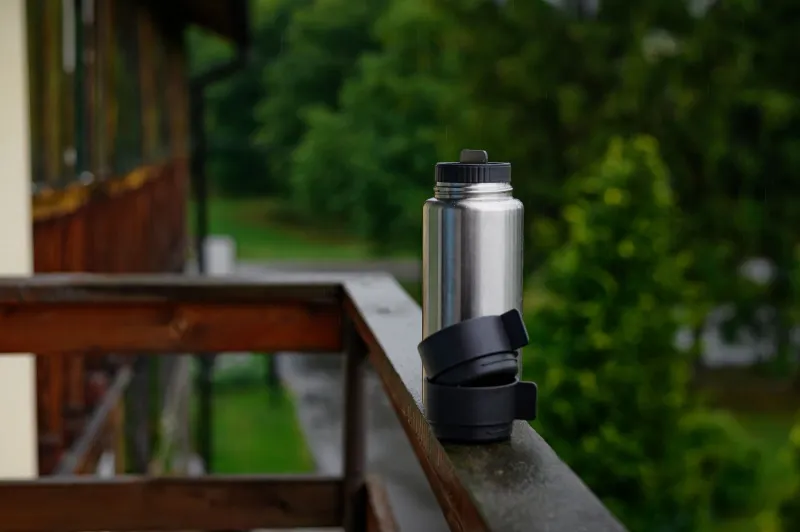
Let's reconstruct the crime scene together, because it deserves to be documented.
Sometime around late December or early January — probably after you read a single wellness headline or watched a 47-second TikTok about "what happens to your skin when you drink a gallon of water daily" — you made a decision. A real one. The kind that feels almost spiritual at 11 PM when you're lying in bed slightly dehydrated from the wine you had with dinner. You were going to hydrate. Properly. Consistently. Like a person who has their life together.
You bought the bottle to prove it.
The Bottle: A Love Story With No Third Act
Not just any bottle. You did research. You read reviews. You compared insulation ratings like you were selecting load-bearing infrastructure for a bridge. You wanted something that kept water cold for 24 hours, which, if we're being honest, was a hedge against the fact that you already knew you weren't going to drink it quickly.
It arrived. It was beautiful. It had a satisfying weight to it — the kind that makes you feel vaguely athletic just by holding it. You filled it up that first night, put it in the fridge, and felt a deep, cellular sense of accomplishment. You didn't drink from it before bed because you didn't want to wake up at 3 AM, but that was fine. Tomorrow. Tomorrow was the day.
Tomorrow you forgot it on the counter.
The day after that, you remembered it in the car.
It has lived in the car ever since.
A Forensic Timeline of the Bottle's Actual Usage
Week one: Filled it four times. Drank from it twice. Felt great about this.
Week two: Filled it twice. Drank from it once. The lid was kind of hard to open one-handed while driving and you didn't want to spill.
Week three: Forgot to bring it inside. It was cold out. You told yourself the car was basically a refrigerator.
Week four: Noticed a faint smell. Decided not to investigate. Left it.
Present day: It is in your back seat, possibly growing its own ecosystem, almost certainly containing water you filled up sometime before a holiday you've already celebrated. You have walked past it approximately 200 times. You have looked at it directly at least 60 of those times. You have thought "I should really bring that inside" on no fewer than 40 separate occasions.
You have not brought it inside.
Why Coffee Counts (It Doesn't, But Let's Talk About It)
Here's where your brain gets very creative and very wrong simultaneously.
Somewhere along the way, you started doing the mental math that lets coffee partially substitute for water. You're not alone in this. Millions of Americans are running the same quiet internal calculation every morning, telling themselves that the liquid part of the latte has to count for something. Technically, yes, coffee is mostly water. Technically, a Snickers bar contains peanuts. Neither of these facts is doing the work you need it to do.
The real issue isn't the coffee. The real issue is that coffee requires nothing from you. You don't have to remember to bring it anywhere. It doesn't judge you from the back seat. It arrives, warm and ready, in a cup that someone else prepared, and all you have to do is accept it. The water bottle, by contrast, is a daily reminder of a commitment you made to yourself that you are quietly, persistently failing to keep.
No wonder you keep choosing the coffee.
The Specific Guilt of the Expensive Bottle
There is a particular flavor of shame that comes with buying a high-quality item as a motivational tool and then not being motivated by it at all. You spent real money on that bottle. You chose the color deliberately. You may have even gotten it monogrammed or added a sticker from a place you visited once that felt meaningful at the time.
And now it's a $40 reminder that good intentions don't automatically produce good behavior. Which is, if you squint, actually a pretty important life lesson — it's just an expensive one to keep relearning in your back seat.
The wellness industry has made billions off this exact cycle, by the way. The idea that the right object will fix the behavior gap. The right planner, the right journal, the right sneakers, the right bottle. Objects are easy to buy. Habits are not. Nobody puts that on the product listing.
What Would Actually Help (Probably)
Here's the thing nobody wants to hear: the bottle being in your car isn't the problem. The problem is that drinking water consistently requires you to think about drinking water consistently, and your brain has about 4,000 other things it's managing at any given moment, and "am I hydrated" ranks somewhere below "did I respond to that text from three weeks ago" and slightly above "when did I last clean the microwave."
Some people set phone alarms. Some people get one of those bottles with the time markers on the side that shame you into drinking by 2 PM. Some people just... put the bottle somewhere they can see it, which sounds embarrassingly simple but is apparently the entire solution.
You could also just bring the bottle inside from the car. Today. Right now, actually. It's been there long enough.
The Year Is Not Over
Here is the one genuinely kind thing this article is going to say: it's not January anymore, but it's also not December. There is still time. Not time to be perfect, not time to suddenly become someone who drinks a gallon a day and tracks it in a color-coded app, but time to do slightly better than whatever is currently happening.
The bar is low. The bar is: retrieve the bottle. Wash it thoroughly — very thoroughly, given the timeline we've established. Fill it up. Put it somewhere visible. Drink from it at least once before you make the coffee.
That's the whole plan. It's not a wellness revolution. It's not a rebrand of your entire relationship with your body. It's just water, in a bottle, in a location that isn't your back seat.
You can do this.
And if you can't, at least you've got a great excuse to buy a different bottle. Maybe this time, one that's easier to open one-handed.