You Bought the Bins, the Labels, and the Dream. They're All Living in Your Closet Untouched.
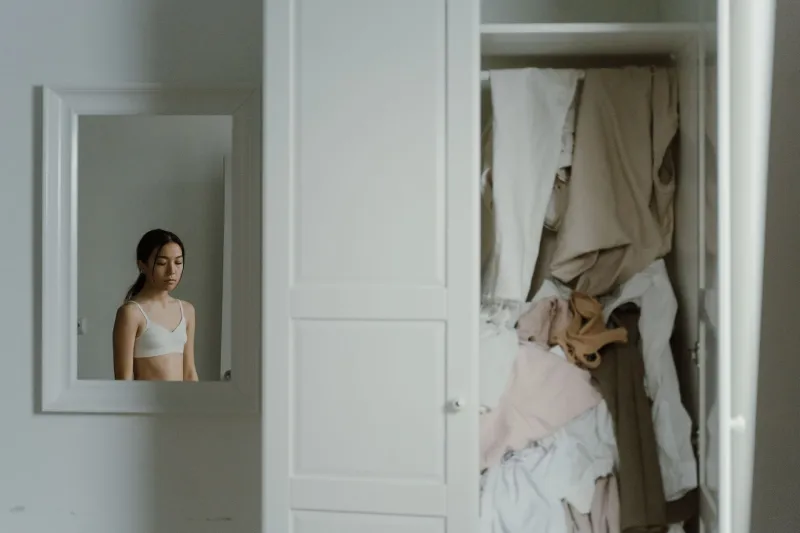
Let's set the scene. It was a Saturday. Maybe a Sunday. The kind of morning where the light came through the window at a flattering angle and you felt, genuinely felt, like a person who had their life together. You'd had coffee. You'd slept okay. You were wearing the good sweatpants.
And then you opened the pantry.
Something shifted. The existential weight of seventeen expired canned goods, a bag of lentils you bought in 2021 with absolutely no plan, and a mysterious sticky patch near the shelf edge — it broke you open. But not in a sad way. In a motivated way. You didn't just see a messy pantry. You saw a project. You saw potential. You saw the before photo of a transformation that was about to happen to you personally.
You went to The Container Store. Or Target. Or you went absolutely feral on Amazon at 11 PM and one-day shipped yourself a future.
The Purchase Was the Peak
Here's what nobody tells you about buying organizational supplies: the purchase itself provides about 94% of the psychological satisfaction you will ever receive from this endeavor. The moment you click "Add to Cart" on that 24-piece modular bin system with the chalkboard labels and the little bamboo drawer dividers, your brain experiences something genuinely close to accomplishment. Dopamine doesn't know the difference between doing the thing and buying the supplies to theoretically do the thing someday. Your brain is very stupid and very optimistic and you love it for that.
The boxes arrive. You stack them by the door. You feel good about this. You are a person who received an organizational system. Progress.
Then Tuesday happens. Then the whole week happens. The boxes migrate from the entryway to the bedroom floor to, eventually, the top shelf of the very closet they were supposed to transform. They are now, technically, stored. You have organized your organizational supplies into a location where they will never be used. This is either deeply ironic or the most honest thing you've ever done.
The Label Maker Is a Particularly Cruel Chapter
If you bought a label maker, we need to talk about the label maker.
You labeled maybe three things. A bin that says BATTERIES in clean sans-serif font, one that says MISC (which is just chaos wearing a costume), and possibly your own name on something in the refrigerator during a petty roommate era. Then the label maker went into a drawer and the batteries died and now it's just another rectangle you own.
The label maker represents peak optimism. It implies a system so thorough, so complete, that every category of object in your home would receive a designated location and a formal announcement of that location. It implies that you are the kind of person who not only organizes their spice drawer but creates signage for it. You are not that person. Nobody in this economy is that person. The people on Instagram who appear to be that person have a weekend home they photograph specifically and a real home that looks like everyone else's.
The Guilt Is the Worst Part
The bins don't just sit there. They loom. Every time you open that closet to grab whatever it is you actually keep in there — the vacuum, a suitcase, a pile of things you're "definitely donating" — you see them. Still in partial packaging, maybe. Still full of potential, technically. Still absolutely not doing anything for anyone.
This is the part where the humor gets a little uncomfortable, because the guilt is real. There's a specific flavor of adult shame that comes from buying something with genuine intention and then failing to follow through, not because you're lazy exactly, but because the version of yourself who was going to install those bins required conditions that never quite materialized. She needed a free weekend. She needed the energy. She needed a YouTube tutorial that didn't make her feel bad about herself seventeen minutes in.
She was going to be so organized. She had a vision board about it, essentially.
What the Bins Actually Represent
Here's the thing — and this is where we get real for exactly one paragraph before going back to jokes — buying organizational systems is a form of hope. It's a completely human, completely understandable way of saying I believe a better version of my daily life is possible and I am willing to spend $47 on that belief. That's not delusion. That's optimism. Slightly misguided, structurally unsound optimism, but optimism nonetheless.
The problem is that organization isn't a product. It's a habit. And habits require repetition and low-stakes failure and time, none of which come in the same box as the acrylic risers. You can buy the infrastructure for a system. You cannot buy the will to maintain it at 7 PM on a Wednesday when you just got home and you're hungry and the bin is right there but the counter is also right there and the counter doesn't require any decisions.
The counter always wins. The counter will always win. This is the first and most important law of domestic physics.
An Honest Inventory of What You Actually Use
For the record, here is what most people actually use to organize their homes: a pile system with internal logic only they understand, a junk drawer that has achieved sentience, approximately one basket that functions as a catch-all near the front door, and the "I know where everything is, don't touch it" methodology that their partners find genuinely unhinged.
And you know what? It works. Sort of. In the same way that everything works sort of. You find your keys most of the time. The bills get paid, eventually. The expired canned goods get cleared out once every eighteen months during a cleaning spiral that will, yes, result in another Amazon order for bins.
The cycle is the system. The chaos is the organization. The unopened label maker in the drawer is, in its own way, exactly where it belongs.
A Gentle Suggestion You Will Also Ignore
You could return them. The bins. They're probably still returnable, or at least resellable. Someone on Facebook Marketplace would genuinely love them. Someone out there is going to install those bins and label them and feel incredible about it for a sustained period of time, and that person deserves them more than your closet floor does.
But you're not going to return them. Because returning them means admitting that the organized pantry life is not currently in the cards, and you're not ready to close that door. Literally or figuratively.
So they'll stay. Waiting. Patient as only inanimate objects can be. A monument to the Saturday morning version of you who genuinely believed this time would be different.
It wasn't different. It's never different. But the next set of bins is already in your cart, and honestly? Good for you. Never stop trying. It's extremely funny and also very relatable and also this website would not exist without you.